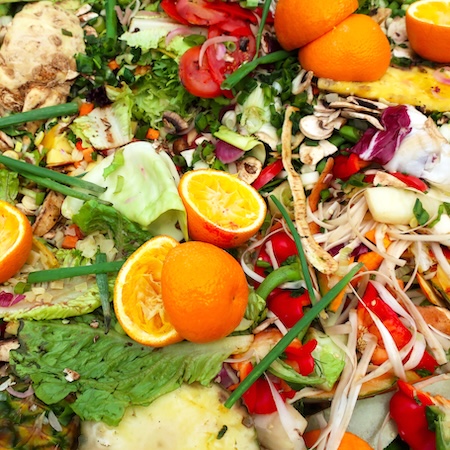
NHS England has issued new guidance to give Trusts further assistance in their efforts to reduce food waste. Available on the Futures Hub, the Best Practice Guide provides key recommendations and detailed advice around what to measure, staff responsibilities and food waste processing, with case study examples included and references to online resources.
The guidance describes food waste within the NHS as “a pressing financial, environmental and clinical issue.” In 2024/25, the NHS spent £477 million on food. Working from the ERIC data for 2024/5 and assuming food waste is split evenly between high and low value food items, halving food waste could save an estimated £43m per year.
WRAP estimates the current NHS food waste levels to be 18%, which is better than the typical figure for comparable sectors, such as hospitality which is 23%. However, NHS England stresses there is more to be done, to reach the long-term ambition of reducing food waste to less than 5%.
Key recommendations
• NHS Trusts should already be actively measuring, monitoring and reducing food waste, which became a legal obligation in the March 2025 Simpler Recycling Legislation, requiring a separate food waste collection. The guidance provides detailed information around the different types of food waste, what to measure and what not to include.
• Adopting Electronic Meal Ordering (EMO) systems was a recommendation of the 2020 Independent Review of NHS Hospital Food. Since then, many sites have introduced an electronic system. However, there remains 488 sites that serve food and do not have an EMO in place, and furthermore, these sites, which serve 41% of meals, generate 51% of declared food waste.
• Empower staff with appropriate training.
• Targeted interventions using data.